
You saw it too
If you’ve followed Cartigan this far, you haven’t seen anything yet.In Book 2, he crosses forward and is hunted through time as the Organisation emerges and the truth about Kira begins to surface.Read the exclusive Book 2 Prologue today and receive priority access to Advance Reader Copies of Book 3.
No spam. No marketing emails. Only classified briefings from Basecamp.

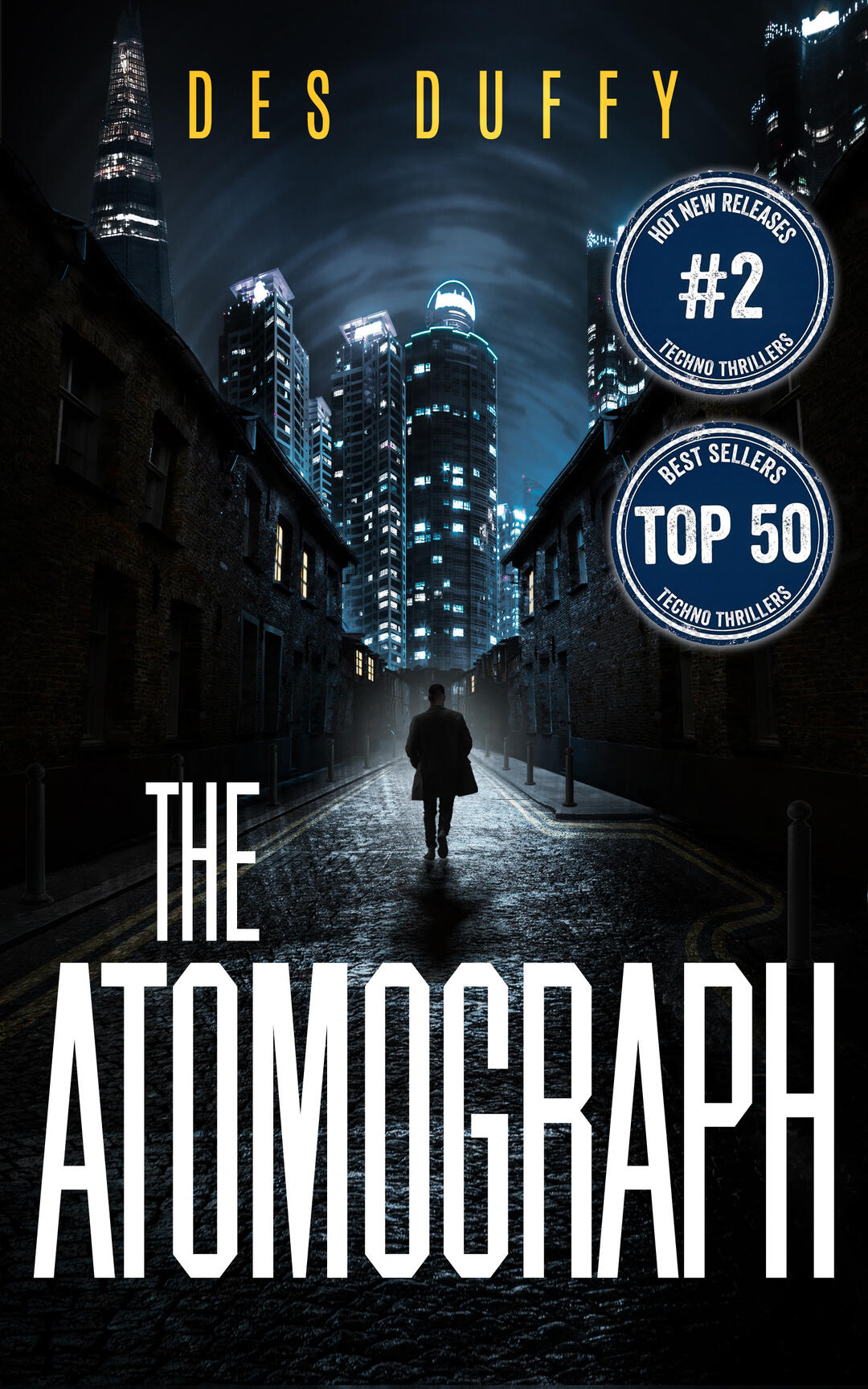

BOOK 1
Where it begins
Joe Cartigan is a washed-up boxer in post-pandemic London. When he's recruited into a covert organisation policing a hundred-year span of history, he becomes a Lawman: an operative sent back to stop catastrophic events before they happen.The Atomograph makes it possible. A wristwatch with a finite charge and strict rules. It lets him travel through time and operate invisibly in short bursts.His early operations take him from Whitehall to Sarajevo. Then Manhattan, September 2001, where a rogue predecessor is trying to prevent the attacks on the World Trade Center. Cartigan’s orders are to stop him.For the first time, the job isn’t to save lives. It’s to make sure three thousand people die on schedule.
Available worldwide through Amazon and leading booksellers
ISBN: 978-1-0369-5743-8
BOOK 2
Sometimes the worst events in history have to happen
Cartigan survived Sarajevo and Manhattan. But those missions changed him, and the questions he's carrying don't have safe answers.In Book 2, he goes further than any Lawman was supposed to go. Someone is watching. Someone is hunting. And the person closest to him may not be what she seems.Read the Prologue exclusively here.
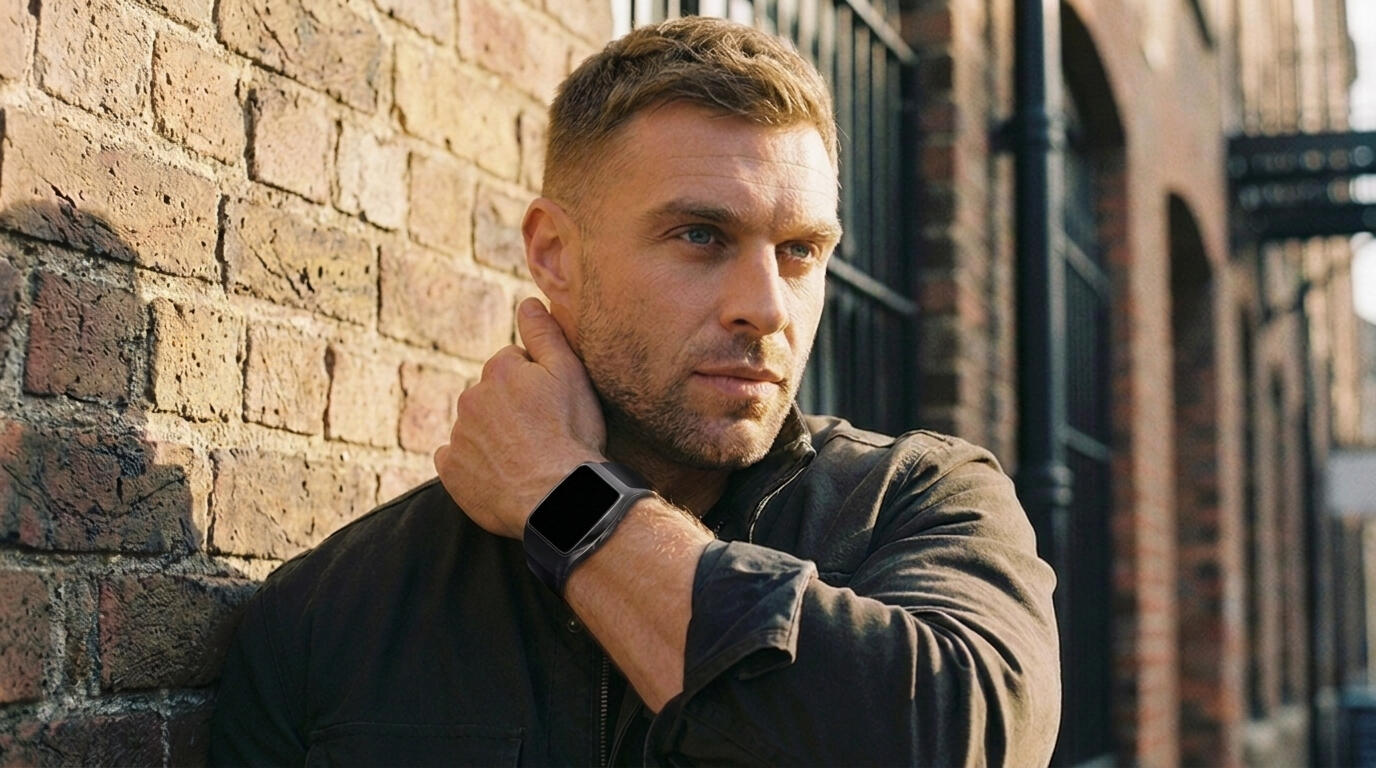
THE LAWMAN
Cartigan
Joe Cartigan keeps his life contained. The gym still runs, but it no longer matters. It’s a place to hold things together, nothing more. Most of what defines him now happens somewhere else.He works inside moments that don’t belong to him, carrying out assignments that leave no trace. He arrives with a plan, adapts when it breaks, and leaves with the outcome. There is no margin for error, and he operates like it.He has become one of their most effective operators. Not because he’s reckless, but because he isn’t. He applies pressure where it matters, takes control when situations turn, and finishes what he starts. The work is brutal when it needs to be, and so is he.Kira directs him. He trusts her judgement because it works. He has also fallen for her, harder than he expected and further than he can afford. It cuts across the job, the rules, and his ability to stay detached.
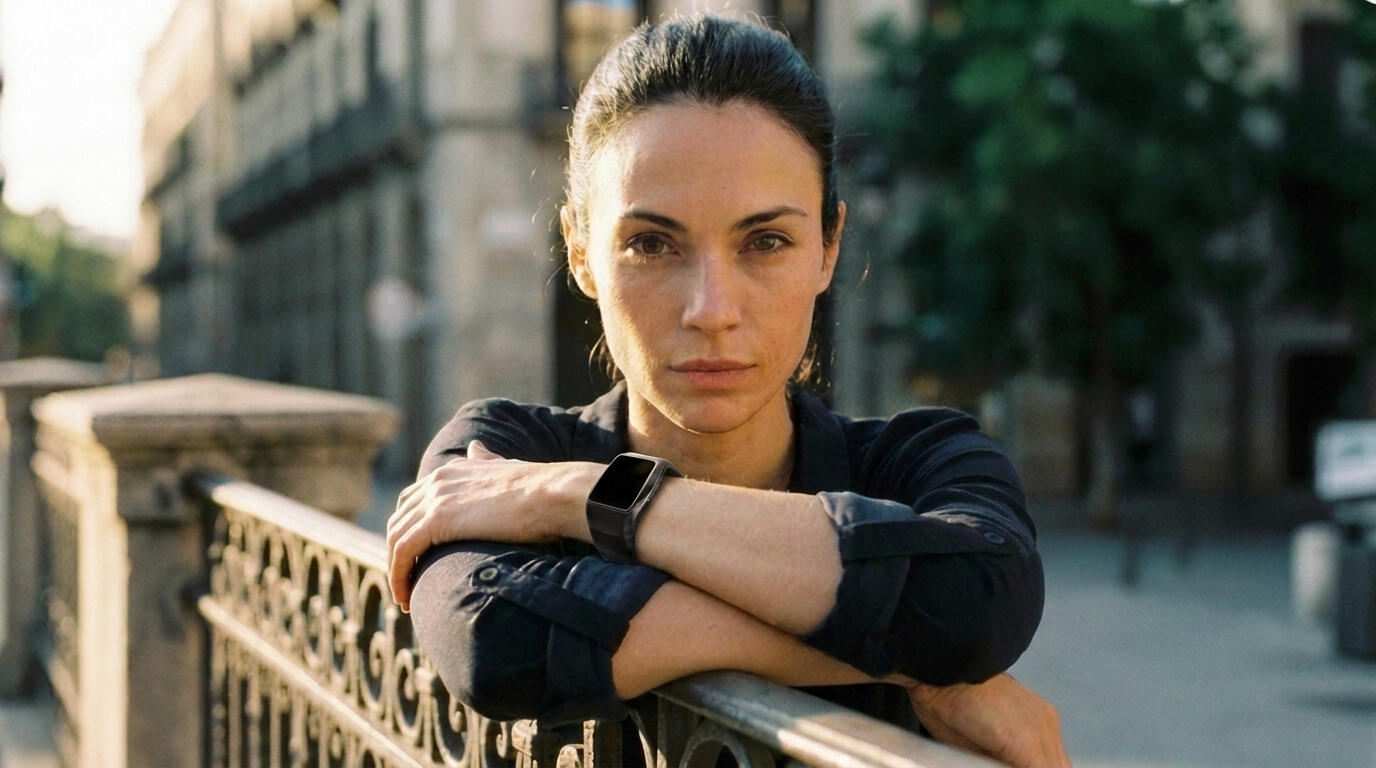
THE HANDLER
Kira
Kira runs the missions. She sets the parameters, reads the movement, and makes the call when things start to shift. If it drifts, she corrects it. If it breaks, she contains it.She has worked in the field and knows exactly what it takes. Now she operates from a distance because it gives her control, and control is what makes her the very best.Cartigan is the one she sends in. He listens, moves, and delivers. He is also the one person she has let get close, and that was never part of her plan.One briefing hasn’t sat right. The outcome made sense on paper. It didn’t feel right in execution. She followed the order, because that is the job.But she hasn’t let it go.
RESPONSE
Witness Statements
Every mission leaves people behind who saw something they weren’t supposed to. History remembers witnesses. These are the first recorded responses to The Atomograph. Tell us what you saw.
"A time travel thriller that will leave you questioning everything."
LoveReading.co.uk


"The fight scenes keep the blood pumping, complete with witty one-liners."
Kirkus Reviews
"I had a hard time putting it down."
Caitlin McHale, NetGalley


"Engaging, tense and gritty. It grabbed my attention."
Phil Martin, Goodreads
BOOK 2
The Span runs both ways
The next operation has already begun.Get early access to Book 3 updates, and the first look when Cartigan crosses again.Read the exclusive Book 2 Prologue today and receive priority access to Advance Reader Copies.
No spam. No marketing emails. Only classified briefings from the Atomograph.
Thank you
You're in. We'll be in touch with exclusive updates and early access to Book 3. In the meantime, Books 1 & 2 are available now on Amazon.

BOOK 2 - PREVIEW CHAPTER
Prologue
Jerusalem. March 17, 1948. 11:45.
The Old City swallowed him whole.Lawman entered through the Jaffa Gate and let the crowd carry him forward. The wardrobe had dressed him well – linen trousers, a collarless shirt, a light jacket cut for the climate, leather shoes scuffed before he'd put them on. He looked like a European merchant, the kind of man who moved through Jerusalem on business that wasn't worth asking about.The streets of the Christian Quarter were narrow and loud. Vendors called from stalls stacked with spices, bolts of cloth, copper pots hammered thin. A boy pushed a handcart of oranges through the crowd, shouting prices in Arabic. Two British soldiers leaned against a wall eating flatbread, rifles slung, eyes bored. An Orthodox priest in black robes swept past close enough to brush his shoulder. The Mandate was collapsing and everyone knew it.The light was hard and white. March in Jerusalem – the sun cutting through gaps between buildings in clean lines that turned the limestone walls to gold. The air smelled of cumin, diesel, old stone, and drains.Lawman turned off the Via Dolorosa at the fourth station and entered a covered alley narrower than his shoulders. At the end, a courtyard – small, private. A building that had been a Crusader hospice and was now, according to the signage, a carpet restorer.The workshop occupied the ground floor. Inside, an old man sat cross-legged on the floor, stitching a repair. He didn't look up."I'm looking for the cistern," Lawman said.The old man's hands stopped."There is no cistern here.""There is. Beneath your floor. Cut from the bedrock in the Second Temple period and sealed by the Hospitaller Knights in 1187.""Were you sent by the custodians?"Lawman smiled.The old man looked at him for a long time. Then he crossed to the far wall, pulled two carpets aside, and pressed something behind them. A wooden panel shifted inward, exposing a gap barely wide enough for a man to pass through. Cool air rose from below.The old man stepped aside.Lawman entered the gap.The passage descended steeply, the light from the workshop fading within a few steps. As he went deeper, the darkness gave way to something unexpected. Light was coming from below – pale, shifting, reflected off water. The passage opened into a vertical shaft. Eight metres straight down to a ledge, and below it, a cistern cut from the bedrock. Shafts of daylight entered through fissures in the rock above, striking the water and sending blades of light dancing across the stone walls.On the far side, a sealed doorway above the waterline.He braced his back against one wall and his feet against the other, and went down. At the ledge, he stripped his jacket and shoes and lowered himself in. Eleven degrees. He swam fifteen metres through the reflected light, pulled himself onto the far ledge, and broke the seal with his elbow. The mortar cracked and the stones fell into the water behind him.Beyond the doorway, a short passage rising to a chamber. Vaulted ceiling, cracked tiles, a wooden crucifix on the far wall. A single fissure in the rock let a thin column of daylight fall through the dust and land on the far wall like a finger pointing.The Seal Ring of King Solomon sat on a square of white linen in a niche cut into the far wall, exactly where the column of light fell. Gold, heavy, wide-banded. The seal of a star within a circle, engraved by a hand that had been dead for three thousand years.He placed it in a leather pouch, tucked it inside his shirt, and went back.The passage, the ledge. He lowered himself into the water and swam. The light danced on the walls above him. He reached the far wall and pulled himself up onto the ledge.Two men were standing over him.Black cassocks. Young, thirties. The one on the left was tall, broad, heavy through the chest and shoulders, with a jaw that looked like it had been carved from the same stone as the walls. The one on the right was built like a middleweight, thick-necked, his cassock tight across arms that hadn't been built by prayer.The tall one spoke first. His voice was measured, formal."You told Brother Masoud that you were sent by the custodians."Lawman pulled himself onto the ledge, water streaming off him."Is that true?" the tall one said.Lawman stood. Water pooled around his feet on the stone."The relic was placed in our care nine centuries ago," the second priest said. "Under a covenant. If you've been sent to retrieve it, you'll be able to confirm the terms of that covenant."Lawman said nothing.The tall priest studied him. "The covenant requires a seal. A document bearing the mark of the custodian. Do you carry one?"Silence."Do you carry any authorisation at all?" the second priest said.The tall priest's expression shifted. Not to anger. To understanding. He looked at the water dripping off the man standing in front of him, at the shape of the pouch visible beneath the wet shirt, at the eyes that hadn't blinked since he'd climbed out of the cistern."You weren't sent by the custodian," the tall priest said quietly."No," Lawman said.The tall priest looked at his partner. Something passed between them – an understanding rehearsed, perhaps prayed over, in the years leading to this moment. The second priest nodded."We took our vows for this purpose," the tall priest said. "We will not allow you to take it.""I know," Lawman said, drawing an ice pick from a sheath on his wrist. He drove it through the tall priest's right eye and into the brain behind it. The man was dead before his knees buckled, before the sound left his mouth, before his partner understood what had happened. He hit the stone ledge face-first and the sound echoed off the water and came back.The second priest saw the body first. Then the man who'd made it. His hands came up slowly, but his eyes had already made the calculation his fists couldn't. Every drill, every hour, every year of preparation – and the man in front of him had killed his brother in less time than it took to draw a breath.Lawman attacked as the second priest looked up. He was on him instantly, driving the ice pick into his heart until the handle hit breastbone. The priest looked down at the handle, then up at Lawman. Their eyes met. His mouth opened but nothing came out. His legs gave. Lawman held him until the light left his eyes, then lowered him onto the ledge beside the other man and let go.Lawman pulled the ice pick from the priest's chest, wiped it on the cassock, and returned it to the sheath on his wrist. He collected his jacket and shoes from the far end of the ledge and dressed. Then he climbed the shaft – back against the wall, feet against the other, the leather pouch pressed against his ribs. The passage up. The gap in the wall.The workshop was empty. The old man was gone.Lawman stepped through the doorway into the courtyard.A Sister waited in the centre of it.Old – seventy, perhaps more. A plain habit, a wooden cross on a cord around her neck. She stood very still in the hard Jerusalem light, her hands clasped in front of her, her face composed.Behind her, the covered alley led back to the Via Dolorosa. Behind Lawman, the empty workshop and the silence beneath it. Between them, a courtyard that had been private for eight hundred years, overlooked by blank windows, quiet except for the distant sound of the Old City going about its business.She looked at him. The wet clothes, the composure, the way he stood. She knew what he'd taken. She knew what it meant."The line has held for nine centuries," she said. Her voice was steady. Accented – German, from another era. "I will not be the last."Lawman looked at her. An old woman in a courtyard in the sun.She would be the last. That was why he was here."God sees you," she said.Lawman stepped forward and broke her neck.She fell where she stood. The wooden cross swung once against her chest and was still. The Jerusalem sun fell across the courtyard and lit the tiles where she lay.Lawman stepped over her. He walked through the covered alley, into the noise and the light and the crowd, and let the Old City swallow him again. The boy with the oranges was still shouting. The British soldiers were still leaning against their wall. A woman was hanging laundry from a balcony above the Via Dolorosa, humming something he didn't recognise.He found a quiet doorway off the Muristan.He pressed Base.

BOOK 1 - PREVIEW CHAPTER
Chapter One
Bermondsey. June 9, 2020. 22:17.
Joe Cartigan didn't believe in fate. Life was a series of punches you either ducked or rolled with, and so far, he'd been taking his fair share on the chin.Tonight, though, the punches weren't literal.His gym was empty, silent but for the low hum of fluorescent lights overhead. He stood in a boxing ring, wiping down the ropes with an old towel that had seen better days. The stereo in the corner was pumping out Elvis Costello, but quietly, like it was embarrassed to still be working.A Nokia 3310 sat on the counter. Ancient tech by anyone's standards, but Cartigan liked it. Reliable. Didn't buzz at him with nonsense every five minutes. It made calls and sent texts. What else did a phone need to do?He tossed the towel over his shoulder and wandered to the counter, where his diary lay open. Its leather cover was cracked, the spine softened from years of being bent back too far. The week ahead showed three sessions pencilled in and a fourth crossed out, a cancellation, no reason given. A couple of years ago, the pages would have been full. Now the gaps between entries told their own story.He leafed through it like he might uncover a surprise, something hopeful tucked between the pages, but there was nothing. Just the slow realisation of how far things had slipped.Beside the diary, a stack of envelopes waited like vultures.Cartigan picked one up, felt the thinness of the paper, and let it fall back onto the pile unopened. He knew what it would say.His eyes drifted to the poster on the wall. An epitaph. It had been up so long the edges had curled inward, and the colours had faded to muted shades of regret.There he was, younger, sharper, fists raised in victory under the bold declaration:Joe Cartigan vs Martin DelaneyIABA SanctionedHeavyweight Championship BoutA faded green shamrock sat at the centre of the poster. It wasn't about money back then.The glare in his eyes told the world he was invincible, unstoppable. The pride of Westport they called him.Cartigan gave a quiet snort and turned away. The kid on the poster was lean, unmarked, twenty-three years old. The man standing in the empty gym was thirty-eight, six-two, and carried muscle earned over decades, not months. The scars on his knuckles hadn't existed yet. Neither had the weight behind his blue eyes. If that kid knew what was coming, he might have thought twice about stepping into the ring.He grabbed the Nokia from the counter and glanced at the screen. No new messages. No missed calls. Same as always.He pocketed the phone and turned off the lights, locking the front door behind him.The street outside was dead.Late-night London, mid-pandemic. Quiet in a way that felt unnatural. Like the world was still waiting for the next hit.His jacket collar was turned up against a light summer mist as he walked, hands in pockets. The gym wasn't much, but it was his. A small, no-frills place that still carried the smell of stale sweat and ambition.Cartigan didn't teach for the money – God knew there wasn't any of that to be made. He taught because it kept him sane.Boxing was honest. The world wasn't.He'd walked for a couple of minutes when the phone in his pocket buzzed.He stopped, pulled it out, and frowned. It was rare enough to get a message on this thing, rarer still at this time of night. The screen glowed faintly in the dark.One new message:Locker 347. Waterloo Station. 23:00.Cartigan stared at the screen.No number. No sender. No explanation.Wrong number.Had to be.He slipped the phone back into his pocket and kept walking.Five steps.Six.He stopped.Something about it didn't sit right.He checked his watch.22:45.Plenty of time to dismiss it and move on.Instead, he turned toward the station.Waterloo Station was mostly empty by the time he got there. A few late-night stragglers milled around, heads down, moving fast.Cartigan's boots echoed against the tiled floor as he scanned the rows of lockers.Number 347 was toward the back, beneath a smashed overhead light.The lock was old-school: a combination dial, the kind that gave tactile feedback as you turned it.He stared at it for a few seconds. Then, on instinct, he keyed a six-digit number. The lock clicked open.Cartigan stood very still. He'd keyed in his birth date.Inside was a small steel case, about the size of a lunchbox. It wasn't locked, but it felt heavy for its size.He lifted it out and glanced around.Nobody watching.At least, not that he could see.He opened the case.Inside was a watch. Sleek, metallic, and probably worth more than his gym.He turned it over in his hands. It looked like something out of a spy movie. Clean lines, minimalist design, a metal that shifted in the dim light in ways he couldn't explain. Something that screamed importance without trying.He closed the case, tucked it under his arm, and headed for home.The streets were quiet. Just the occasional rattle of a passing car in the distance and the weight of the evening pressing on his mind.By the time he climbed the stairs to his one-bedroom flat, Cartigan had all but convinced himself the whole thing was some elaborate prank.He dropped his jacket onto the sofa, kicked off his boots, and set the case on the kitchen table.He sat down and stared at the watch for a long time. He pressed the buttons on its side, twisted the dial, turned it over and tried again. Nothing. Whatever it was, he couldn't power it up.Then he put it back in the case, shoved the whole thing into the cupboard above the fridge, and shut the door.The last thing he needed tonight was more mysteries.Whatever this was, it could wait until morning.He collapsed into bed. Sleep didn't come easily, but when it did, it was heavy and dreamless.The device sat in the cupboard, waiting.